

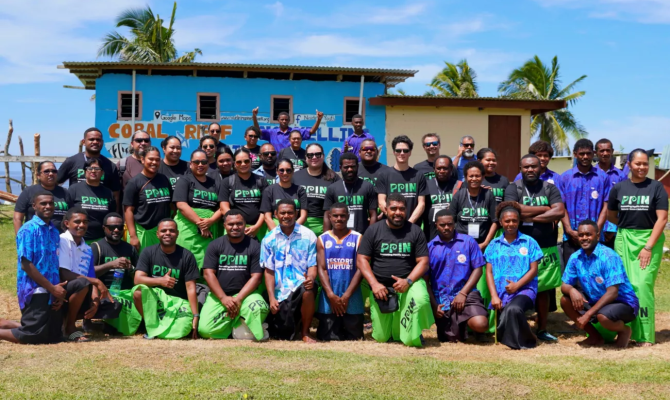
Across the Pacific, coastlines are already changing. Rising seas, stronger storm surges, and saltwater intrusion are eroding shorelines, damaging ecosystems, and placing increasing pressure on communities whose lives and livelihoods are closely tied to the ocean. Strengthening coastal resilience is now a critical national priority for Pacific Island countries.
Nature-based Solutions (NbS), such as mangrove restoration and coral reef rehabilitation, offer proven, cost-effective approaches to reducing coastal risk while supporting biodiversity, fisheries, and community wellbeing. However, effective implementation requires technical expertise, site-specific planning, and sustained engagement with local communities. Across the region, countries have consistently identified the need for practical, applied training to strengthen their ability to design, implement, and sustain these solutions.
This need was clearly identified through a regional capacity needs assessment led by SPC in 2024. Practitioners from Fiji, Tonga, and Vanuatu highlighted the importance of hands-on training focused on practical implementation, tailored to the environmental and institutional realities of Pacific Island countries.
In response, SPC convened 35 practitioners from across Fiji, Tonga, and Vanuatu for Resilient Shores, Resilient Communities, a three-day regional training exchange delivered under the Promoting Pacific Islands Nature-based Solutions (PPIN) programme. Women represented 51% of participants, reflecting strong gender-inclusive engagement and SPC’s commitment to equitable capacity strengthening across Pacific Island countries.
Participants represented national government ministries, regional organisations, civil society, and community groups responsible for coastal management and climate adaptation. This included representatives from the Fiji Ministry of Environment and Climate Change, Fiji Ministry of Forestry, Tonga Ministry of Forestry, Tonga Department of Environment, and the Vanuatu Department of Forestry, alongside regional and technical organisations including SPC, the Secretariat of the Pacific Regional Environment Programme (SPREP), International Union for Conservation of Nature (IUCN), Global Green Growth Institute (GGGI), Live and Learn Environmental Education, Conservation International, and iTaukei Women in Conservation.
Dr Rakeshni Lata, Training and Capacity Building Officer for Nature-based Solutions with SPC’s Climate Change and Sustainability Division, said the exchange reflects SPC’s role in strengthening technical capacity across Pacific Island countries.
“SPC works directly with member countries to strengthen their capacity to design and implement NbS that respond to their national priorities and local environmental conditions. This training provides practical skills, technical guidance, and regionally relevant knowledge to support countries to apply these solutions effectively and sustainably.”
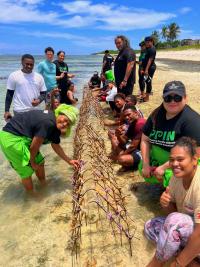
Over the first two days, participants focused on the technical foundations of coastal NbS implementation. Sessions explored how to select appropriate mangrove species, assess site suitability, and understand critical environmental factors, including tidal flow, sediment dynamics, and ecosystem interactions. Participants examined how restoration approaches must be adapted to local conditions to ensure long-term success.
The training also introduced practical tools to support planning and monitoring, including basic land-use assessment, ecosystem monitoring methods, and indicators that communities can use to track shoreline stability and ecosystem recovery over time.
Dr Lata noted that strengthening technical understanding is essential to ensuring successful implementation.
“Effective NbS depend on careful design, informed by science, local knowledge, and environmental conditions. Building this capacity helps ensure that restoration efforts deliver lasting protection for coastal communities.”
Community engagement was a central focus throughout the exchange. Participants explored approaches to working with customary landowners, incorporating traditional knowledge, and supporting locally led implementation to ensure long-term sustainability.
For Ms Seini Vailola Fifita, Food Systems Officer with Live and Learn Tonga, the training provided practical skills directly relevant to Tonga’s coastal resilience efforts.
“This training has strengthened our ability to design mangrove restoration that responds to our local conditions, rather than applying generic approaches. Learning alongside practitioners from across the Pacific highlighted that while our contexts differ, many of our challenges are shared. This exchange has strengthened regional collaboration and provided practical tools we can use to improve coastal resilience in our own communities.”
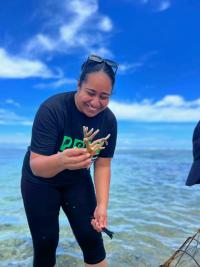
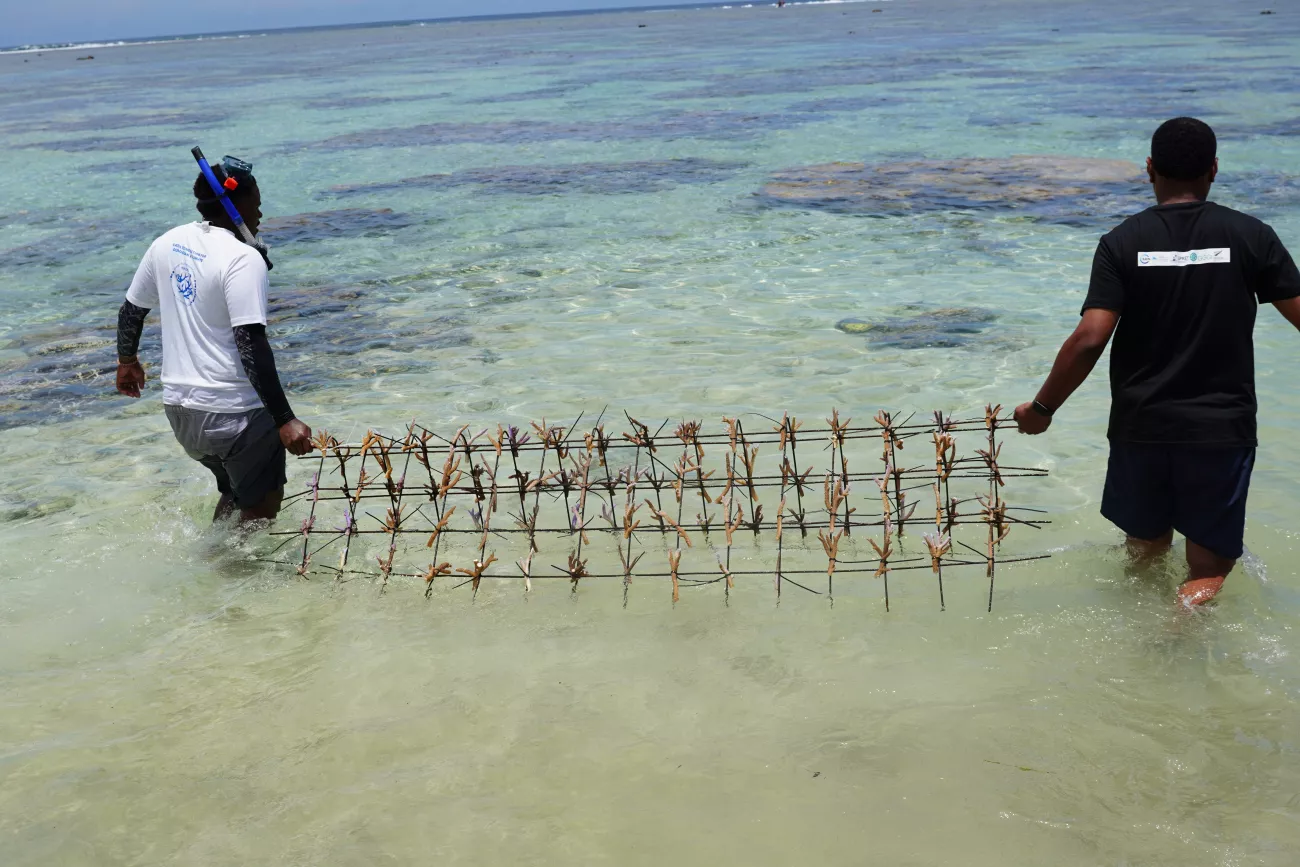
On the final day, participants visited a coastal restoration site in Nadiri, where they observed mangrove planting and coral restoration efforts and engaged directly with local practitioners to understand implementation challenges and lessons learnt.
Field-based learning plays a critical role in strengthening practitioner confidence and bridging the gap between technical knowledge and real-world implementation.
By the end of the exchange, participants had developed site-specific action plans tailored to coastal environments in their home countries, alongside practical monitoring approaches that can be implemented in partnership with communities.
Delivered by SPC in partnership with IUCN, SPREP, and GGGI, and supported by the New Zealand Ministry of Foreign Affairs and Trade through the RECCA initiative, the exchange represents a strategic investment in strengthening Pacific-led implementation capacity.
As climate impacts accelerate, building technical capacity will be critical to help Pacific Island countries implement Nature-based Solutions and strengthen coastal resilience.
For more information:
- Rakeshni Lata – Training and Capacity Building Officer for Nature-based Solutions, PPIN, SPC’s Climate Change and Sustainability Division | rakeshnil@spc.int
- Sunayna Nandini – Information and Communications Officer, SPC’s Climate Change and Sustainability Division | sunaynan@spc.int
